Why a Fuel Tank Feels Bigger Than an EV Battery
Understanding energy density, efficiency and why EVs appear more sensitive to loads like air conditioning.
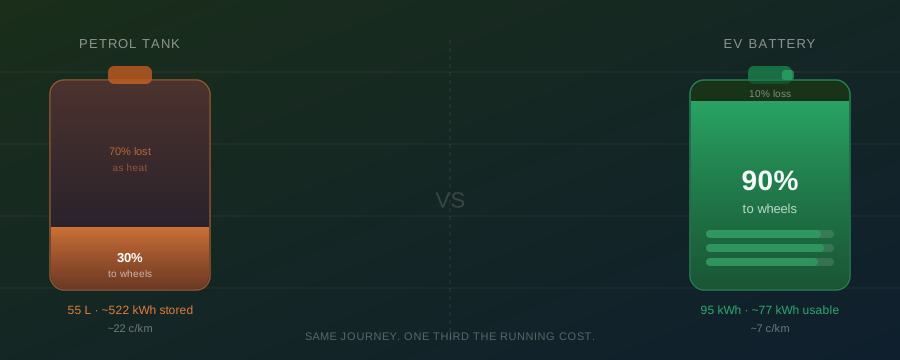
EV batteries feel small next to petrol tanks. A 95 kWh battery sounds modest against a 55 litre tank. But the comparison ignores the most important variable: how much of each energy source actually reaches the wheels.
A 55 litre petrol tank therefore yields about 165 kWh of chemical energy, roughly 50–55 kWh usable for forward motion. A 95 kWh gross EV battery yields ~77 kWh usable — at ~90% efficiency versus ~30%.
Usable Energy Comparison
| Petrol (55 L) | EV (95 kWh) | |
|---|---|---|
| Chemical / stored energy | ~522 kWh | 95 kWh |
| Drivetrain efficiency | ~30% | ~90% |
| Usable energy at wheels | ~165 kWh equiv. | ~77 kWh |
| Running cost per km | ~22c/km | ~7c/km |
Why EVs Feel Sensitive to Load
Air conditioning draws 2–3 kW in both petrol and electric vehicles. In a petrol car, this is invisible — baseline combustion losses are so large that A/C is a rounding error. In an EV operating at 90% efficiency, every kilowatt of additional draw is clearly visible in range prediction.
EVs aren't fragile — they're just honest. The sensitivity to accessory loads is a feature of high efficiency, not a limitation.
The Grid Question
Full Australian EV adoption (~20.1 million vehicles) would add roughly 90 TWh/year to electricity demand — approximately 40% on top of current annual consumption of 220 TWh. Significant, but distributed across off-peak hours and manageable with smart charging. A planning challenge, not a roadblock.