Solar
EnerLogic Solar System Guide 2026
Everything you need to choose the right solar panels, battery, inverter and tariff plan for an Australian home in 2026.
April 2026 · 10 min readRead →
Solar, batteries, EVs and home electrification — explained honestly for Australian households.
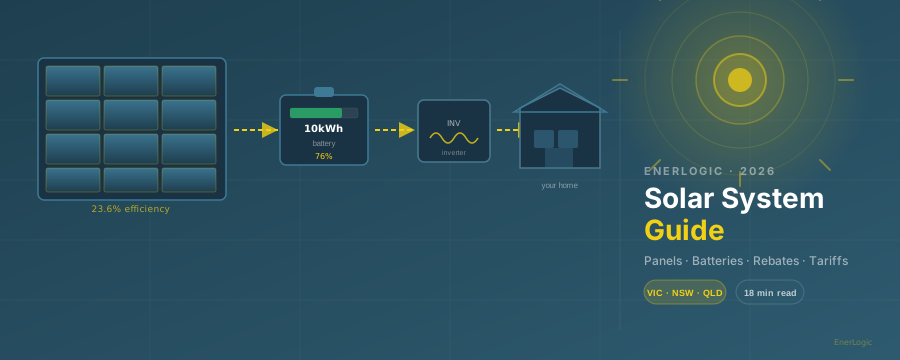
Everything you need to choose the right solar panels, battery, inverter and tariff plan for an Australian home in 2026.
Solar panels only produce during daylight hours — but your biggest loads often run at other times. Load shifting is the strategy that closes the gap and maximises your savings.
Homeowners who activate solar in summer report noticeably higher early satisfaction than those who start in winter. Here is why — and why the long-term math is the same.
A high electricity bill in one month does not mean your solar is underperforming. Annual savings give you an accurate picture of your investment.
Solar panels are warranted for 25 years. Batteries are not. Here is what determines battery lifespan and how to maximise yours.
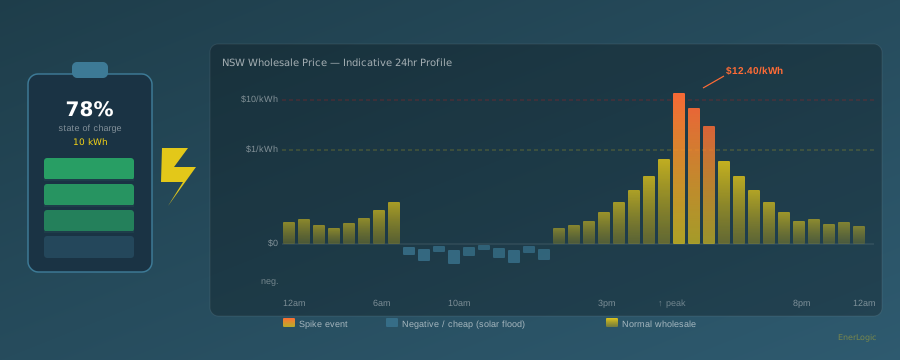
Real numbers on payback periods, arbitrage potential and the conditions under which home batteries make genuine financial sense.
A home battery cannot power everything indefinitely — but the right load selection keeps your most important appliances running through a blackout.
Most Australian households can cut their energy bills by 5–30% through small changes — and you can find those opportunities yourself with no special equipment.
Hot water accounts for around 25% of the average Australian household energy bill. Pipe insulation and tank blankets are low-cost measures with fast payback.
A home battery can be charged entirely from the grid — no solar panels required. Here is when that makes financial sense and what the limits are.
Heat pumps are the most efficient heating and cooling technology available to Australian homes. Here is a full breakdown of purchase, installation and running costs — including rebates.
Drafty windows undermine home comfort and push heating and cooling bills higher. Most fixes cost under $50 and take an afternoon.
Low-emissivity (Low-E) windows use an invisible coating to reduce heat transfer in both directions — cutting cooling loads in summer and heating loads in winter.
R-value measures how well insulation resists heat transfer. The right R-value for your home depends on your Australian climate zone — and getting it wrong wastes money in both directions.
Every EV can charge from a standard Australian power point — but a dedicated home charger delivers overnight full charges. Here is when each option makes sense.
EV batteries are warranted for 8 years or 160,000 km. Real-world data suggests they often last 15–20 years. Here is what determines lifespan and how to protect yours.
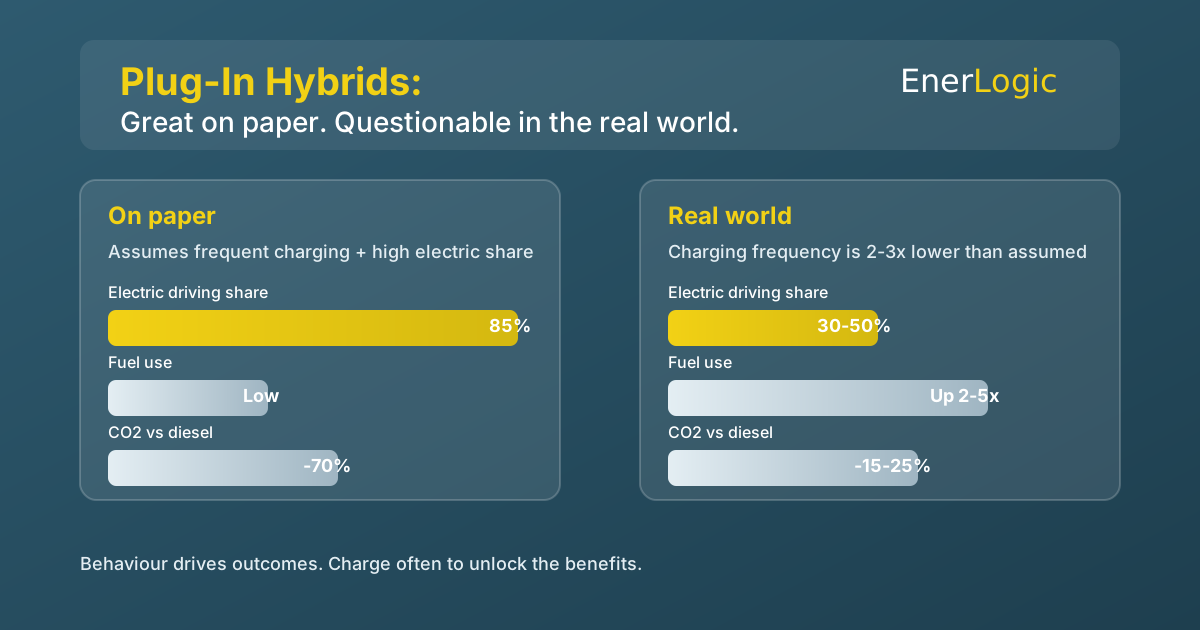
The PHEV pitch works if users behave optimally. Most don't — and the emissions data shows it.
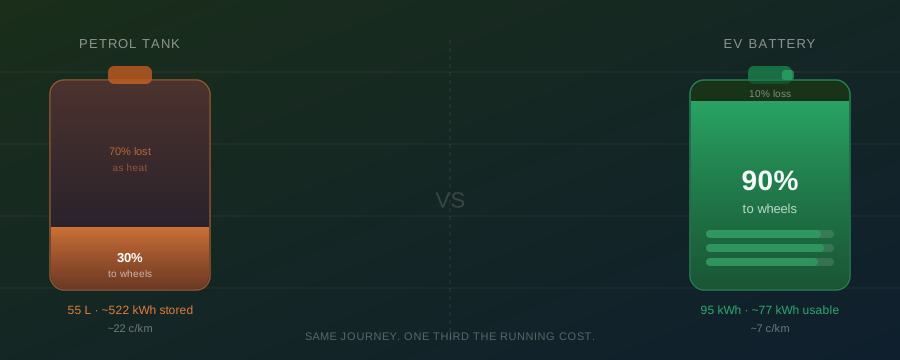
Understanding energy density, efficiency and why EVs appear more sensitive to loads like air conditioning.
Climate change is actively unfolding in Australia. Record temperatures, bushfire seasons and reef bleaching are not future risks — they are current realities. Clean energy is the most powerful response available to households.
A virtual power plant (VPP) connects thousands of home batteries, solar systems and smart devices into a coordinated energy network that earns participants bill credits or cash.
Australia recycles over 60% of municipal waste — but recycling rates for plastic remain critically low. Here is what actually gets recycled, what does not, and why it matters.
Individual actions accumulate into collective impact. Here are 25 practical, Australian-specific steps that reduce emissions and often save money at the same time.
Greenhouse gases trap heat in Earth's atmosphere. Without them, the planet would be uninhabitable — but human emissions have tipped the balance into dangerous territory.
Climate change affects every aspect of life on Earth — ecosystems, human health, food security and economic stability. Here is why the pace of change matters as much as the scale.
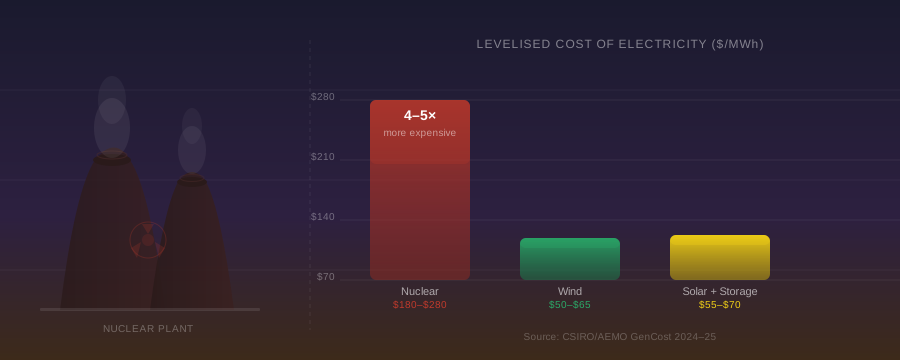
Supporters cite firm, 24/7, low-emissions electricity. Critics flag construction timelines, cost overruns and water use. The numbers are less ambiguous than the politics.