The Reality of Climate Change: What Australians Need to Know
Climate change is actively unfolding in Australia. Record temperatures, bushfire seasons and reef bleaching are not future risks — they are current realities. Clean energy is the most powerful response available to households.
Australia is one of the most climate-exposed developed nations on earth. We experience more extreme heat events, longer bushfire seasons and more intense rainfall events than decades past. The Bureau of Meteorology (BoM) recorded Australia's warmest year on record in 2023, and the trend has been consistent for three decades. Understanding the reality — not the political framing — is essential for making good decisions about home energy.
What Is Already Happening in Australia
- Australia has warmed by approximately 1.5°C since 1910, with most of that warming occurring since 1950 (CSIRO, Bureau of Meteorology)
- The 2019–20 Black Summer bushfires burned more than 18 million hectares — the largest fire season in recorded Australian history
- The Great Barrier Reef has experienced six mass bleaching events since 1998, with the 2022 and 2024 events being the most severe on record
- 2022 saw catastrophic flooding across south-east Queensland and northern NSW, with over $6 billion in insured losses
- Sea surface temperatures around Australia have increased by more than 1°C since the 1950s
- Torres Strait Islander communities face existential threat from sea level rise already measurable in their homes
Why Individual Action Matters
A common objection is that individual household actions are too small to matter against global-scale emissions. The objection misunderstands how change works. Australia's world-leading rooftop solar penetration — over 3 million homes — now provides around 12% of national electricity. It happened because millions of individual decisions accumulated. The same dynamic applies to EVs, heat pumps and home batteries.
The Cost of Inaction
The economic argument for clean energy is increasingly straightforward. The Climate Council estimates climate change will cost Australia $584 billion by 2030 in health costs, productivity losses and damage. The Insurance Council of Australia has flagged that insurance may become unaffordable or unavailable in some high-risk areas within a decade. Rooftop solar, on the other hand, typically pays back in 4–8 years at current Australian electricity prices.
What Solar Means for the Grid
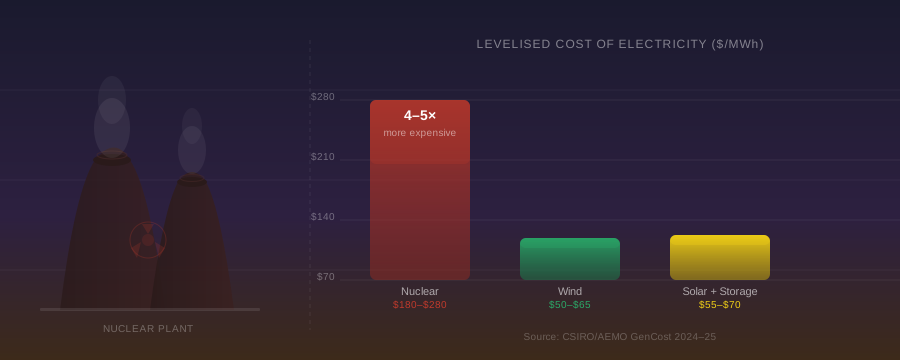
Research from the National Renewable Energy Laboratory (NREL) shows solar generates approximately 20 times fewer lifecycle carbon emissions than coal generation and 10 times fewer than gas. Each household that installs solar reduces demand on coal and gas-fired generators. The Australian Energy Market Operator (AEMO) projects that a high renewable scenario requires significantly less new gas capacity because distributed solar and storage reduce peak demand on the network.
Climate change is not an abstract future risk for Australians — the cost is already visible in insurance premiums, bushfire smoke, coral reef loss and extreme weather. Clean energy adoption is both an emissions response and a financial hedge.
What Homeowners Can Do Now
- Install rooftop solar — the most impactful single household action for both emissions and bill reduction
- Replace gas appliances (heating, hot water, cooking) with efficient electric alternatives
- Improve home insulation and draught sealing — reduces energy demand permanently
- Switch to an EV when next replacing your vehicle
- Sign up for a retailer with renewable energy options or a green tariff