What Can a Home Battery Power? Choosing Your Backup Loads
A home battery cannot power everything indefinitely — but the right load selection keeps your most important appliances running through a blackout.
Solar, batteries, EVs and home electrification — explained honestly for Australian households.
A home battery cannot power everything indefinitely — but the right load selection keeps your most important appliances running through a blackout.
Most Australian households can cut their energy bills by 5–30% through small changes — and you can find those opportunities yourself with no special equipment.
Hot water accounts for around 25% of the average Australian household energy bill. Pipe insulation and tank blankets are low-cost measures with fast payback.
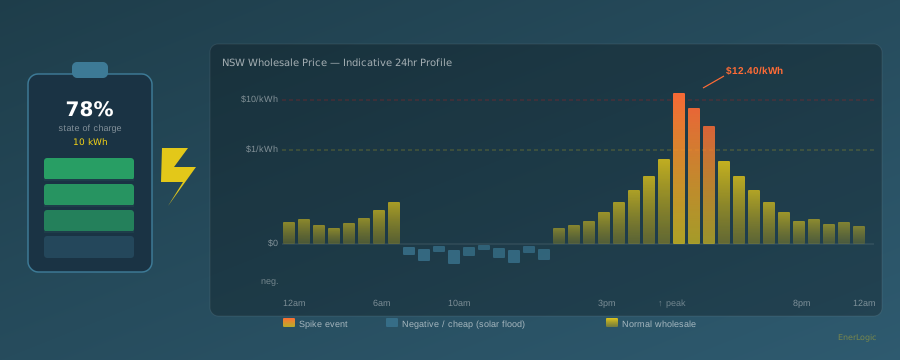
A home battery can be charged entirely from the grid — no solar panels required. Here is when that makes financial sense and what the limits are.
Heat pumps are the most efficient heating and cooling technology available to Australian homes. Here is a full breakdown of purchase, installation and running costs — including rebates.
Drafty windows undermine home comfort and push heating and cooling bills higher. Most fixes cost under $50 and take an afternoon.
Low-emissivity (Low-E) windows use an invisible coating to reduce heat transfer in both directions — cutting cooling loads in summer and heating loads in winter.
R-value measures how well insulation resists heat transfer. The right R-value for your home depends on your Australian climate zone — and getting it wrong wastes money in both directions.